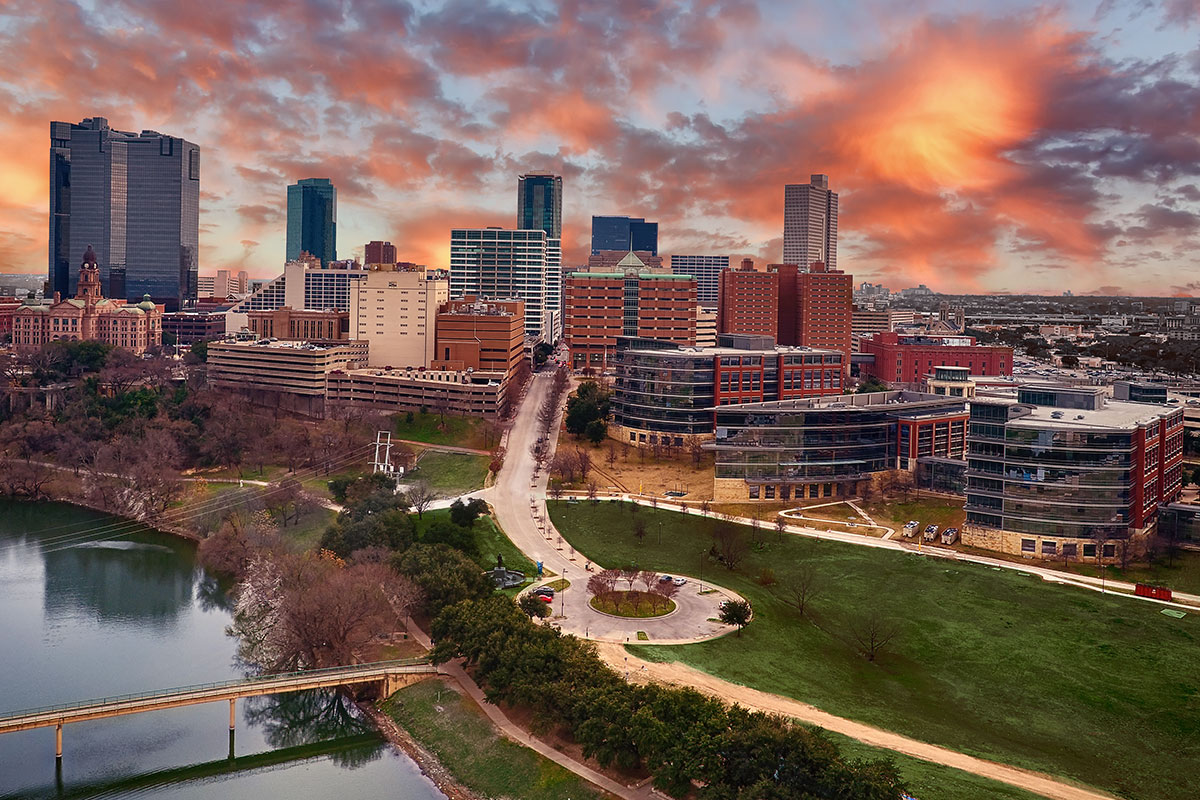
I’ve lived and worked in Fort Worth for much of my life, both in banking and outside of it. I’ve reflected on what it means to be a leader in this city and what it means to me to be a part of this community. But in all my time in this market, the explosive growth and innovation we are seeing right now across the state is perhaps the most exciting chapter yet.
Population surge
The number one driver of more business: more people. Texas is growing. The nation’s five fastest growing cities are all in Texas, with the Dallas Morning News‡ citing strong schools, safety and location as key drivers. Four of the top five are situated in Collin County within the metroplex, while one sits just outside Houston.
For most of us who live here, this boom is not unexpected. We have seen the local growth over the past decade, with new neighborhoods, retail centers and healthcare expansions in our area, to name a few. Strong regional employment, combined with a relatively lower cost of living compared to major urban cores, continues to pull both out-of-state transplants and local movers into these suburbs.
Economic factors impacting Texas today
Texas remains strong economically. The local Federal Reserve‡ reports that the Texas economy entered the year on stronger footing in 2026 than in 2025, with employment rising and business activity expanding. Just recently, Texas 2036 announced‡ that the state increased its share of the U.S. economy more than any other state between 2000 and 2025.
In my town of Fort Worth, I personally enjoy several of the economic machines driving growth. From the Fort Worth Stock Show‡ to a growing film industry, there are varied drivers of population, entertainment and enjoyment that cement our status as the fifth most populus city in the state. The excitement of FC Dallas and the economic impact of the World Cup brought more spectators and enjoyment to the city this summer. Hosting nine matches total, more than any other World Cup site, the region’s size, stability and offerings likely earned more than any other U.S. game site (and I look forward to those reports).
The impact of the World Cup was notable for the Fort Worth Stockyards, another economic driver and tourist destination making waves in the region. The Stockyards drew more than 1.8 million people‡ over the course of the 39-day tournament, a record for the attraction. This speaks to the increasing popularity of the historic site, which is primed for continued development, including a luxury resort and future development and renovations by Stockyards Heritage Development Company. With the increased attention, foot traffic and expansion, I expect the Stockyards to continue driving economic opportunities for many different sectors.
Also notable, Fort Worth is considering a high-speed rail line that could generate $1.2 billion in annual spending citywide from visitors and residents alike, not to mention hotel tax revenue, property tax and commercial development, according to an economic impact study‡ from the cities of Fort Worth and Arlington. The route includes proposals for lines from Fort Worth and Arlington to Dallas and Houston as well as another option linking Fort Worth to a planned San Antonio-to-Laredo passenger line along the Interstate 35 corridor. Plans are ongoing and it is exciting to consider additional transportation for our population.
Open for business
With all of this growth—and anticipation of continued expansion—the bottom line is that DFW is open for business. The facts are clear. Texas claims the national lead for Fortune 500 companies with 57 corporate headquarters and a combined revenue of $2.8 trillion‡. It is also becoming notable for corporate relocations, leading the nation with 111 headquarter relocations between 2018 and 2025, according to a CBRE report‡. Key drivers for the relocations include moving from higher cost markets like California, and cites DFW’s labor availability and diverse talent as reasons to move.
In financial services, this summer the Texas stock exchange officially opened‡, affectionally known as “Y’all Street.” Backed by financial heavyweights like BlackRock and Citadel, the region is looking to challenge NYSE and Nasdaq with our own national exchange hub. Already, DFW had surpassed Los Angeles and Chicago to become the second-largest financial services employment hub in the country, behind only New York City.
Bullish on Texas
UMB has been a proud member of the Texas market since 2013, and we continue to invest and grow here. Over the past year, from June 2025 to June 2026, Texas increased $643 million, or 17.4%, with loan balances totaling $4.3 billion across the state. This builds on the momentum gained after closing he largest acquisition in UMB’s company’s 113-year history in 2025, which elevated us to the top 5% of publicly traded banks in the U.S., nearly doubled our retail base and expanded our footprint by five states, including several new branches in West Texas. We continue to be bullish on Texas.
Texas is a varied, exciting and dynamic region, and all signs point to a bright future with endless opportunities for businesses and communities alike.
If you are interested in learning more about how UMB can help your business and set your financial future, visit our website.
When you click links marked with the “‡” symbol, you will leave UMB’s website and go to websites that are not controlled by or affiliated with UMB. We have provided these links for your convenience. However, we do not endorse or guarantee any products or services you may view on other sites. Other websites may not follow the same privacy policies and security procedures that UMB does, so please review their policies and procedures carefully.