
Running a practice means managing more than patient or client needs. You also oversee employees, vendors, supplies, technology, travel and countless other business expenses. A commercial credit card can help make those responsibilities easier to manage.
A commercial credit card can help your practice control employee spending, simplify expense management, improve visibility into purchases, reduce exposure to fraud and potentially earn rebates on everyday business expenses. Most importantly, it creates a clear separation between practice-related purchases and personal finances.
Improve security and control over practice spending
One of the most significant benefits of a commercial credit card is the ability to establish controls around employee spending. For example, you (or the card administrator) can set the limit for office employees’ purchases at a much lower credit limit than what you have access to.
While the owner of the practice can limit the purchasing power for employees to reduce risk and fraud, he or she can still have access to a higher credit limit to purchase consumable inventory and make other large monthly expenses.
Simplify expense management and reconciliation
Efficiencies can also be gained for the back office when using a commercial credit card. Many cards now offer seamless integration with accounting software programs, which allows for time-saving expense management. For example, through accounting software integration, charges will automatically be categorized into expense type which removes the need to enter them manually.
Additionally, the reporting functionality associated with these accounts tends to be more robust than personal credit cards. This allows for expense segmentation and allocation, which can help practice owners identify key areas for expense streamlining or more accurate budgeting.
Online commercial card management platforms can also provide visibility into transactions before the monthly statement arrives. That means practice administrators can begin reviewing and reconciling expenses throughout the billing cycle instead of waiting until the end of the month.
For practices with multiple employees or locations, centralized reporting can make it easier to understand where money is being spent and identify opportunities to improve efficiency.
Keep personal and practice finances separate
Using a personal credit card for practice expenses may seem convenient, but it can create unnecessary complications.
Separating business and personal purchases with a dedicated commercial credit card can help make bookkeeping, expense tracking and tax preparation more straightforward. It also gives the practice a centralized record of business purchases rather than requiring the owner to sort through personal transactions.
With their personal card, the practice owner takes on risk related to their individual finances and credit score. Commercial credit cards shift the risk from one person to a registered company. And, allowing employees to manage expenses with company cards helps track activity, limits exposure of sensitive information and allows for critical card controls.
And if fraud were to occur, commercial credit cards may have protection that can help cover losses – protections that differ from consumer credit cards.
Commercial credit card vs. personal credit card
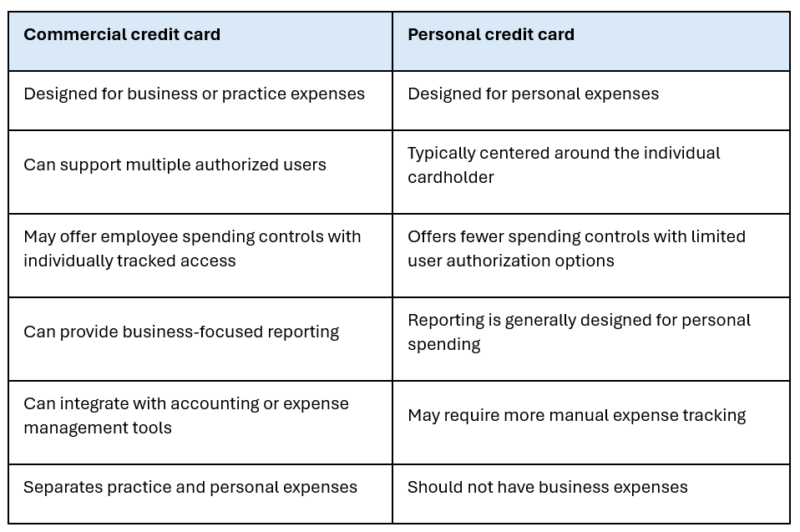
For practice owners, the distinction between credit card types is important: A card designed for business spending can provide tools and controls that a personal card does not.
Earn rebates on everyday expenses
While many personal cards tout attractive rewards programs, often the annual fee and true monetary value of those rewards is not as competitive as a commercial card rebate program.
Many commercial cards do not have an annual fee, and most offer cash rebates as rewards. Additionally, individual practices can look for an option that maximizes their overall spending such as earning a flat cash-back percentage of total purchases.
For those who need more spending power, there are also consortium programs that leverage the collective purchases of a group of businesses, providing the necessary scale to receive higher rebates.
Commercial cards also tend to have more competitive rates and fee structures than personal credit cards, which can provide significant savings. With a personal card, the practice owner will build credit under his or her own personal credit and be required to meet minimum payments. A commercial card credit line is determined by the financial performance of the business and purchases are paid in full monthly.
Businesses need business-centric solutions
For a growing practice, the right commercial credit card program can help bring greater control, visibility and efficiency to everyday spending. From employee purchasing controls and enhanced fraud protection, to expense reporting and potential rewards, commercial cards provide tools designed around the way businesses operate.
The key is finding a program that fits the practice’s spending patterns, administrative needs and growth plans.
UMB commercial credit card programs offer businesses tools designed to help manage day-to-day spending, including online account management, reporting, and expense management. Learn more about how a commercial card program can help your practice manage business expenses.